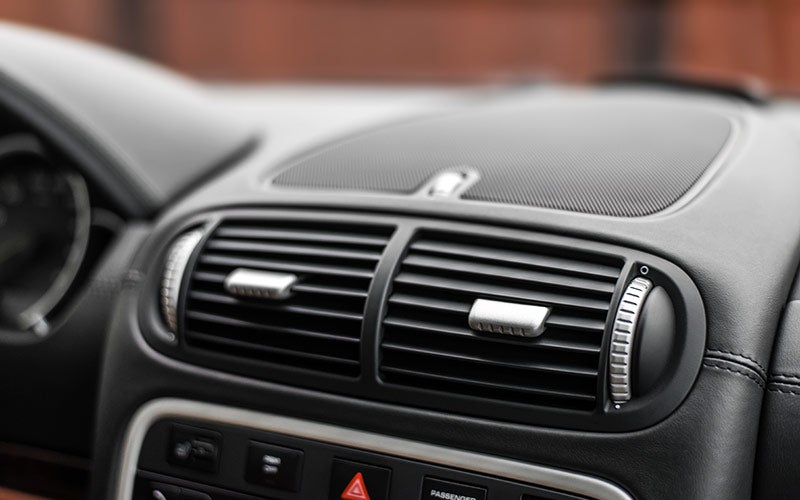
If your Ford A/C smells musty when you turn it on, the odor may be caused by moisture accumulating around the air-conditioning evaporator, a dirty cabin air filter, a restricted condensation drain, or damp materials inside the ventilation system. These problems can become more noticeable in Miami's hot and humid climate, where drivers rely heavily on air conditioning throughout the year. Whether you drive a Ford F-150, Explorer, Escape, or Bronco Sport, identifying when the smell appears can help determine whether your vehicle needs a cabin air filter replacement, A/C cleaning, or professional HVAC diagnostics.
Schedule Ford A/C Service Explore Ford Service
Why Does My Ford Air Conditioner Smell Musty?
A musty smell coming from your Ford's air-conditioning vents often indicates moisture or contamination somewhere in the HVAC system. One possible source is the evaporator, which removes heat and moisture from the air as the A/C operates.
When humid air passes over the cold evaporator, water vapor condenses on its surface. Normally, that moisture drains beneath the vehicle through a designated condensation drain.
However, moisture can sometimes remain on internal surfaces. Under certain conditions, microbial growth or accumulated debris may contribute to unpleasant odors.
A dirty or damp cabin air filter can also contribute to odors, while water leaks or moisture trapped inside the vehicle may produce a similar smell.
For Ford drivers around Miami, Doral, Fontainebleau, and Kendall, recognizing the difference between these conditions is useful because the appropriate repair depends on the actual source.
1. Moisture Buildup Around the A/C Evaporator
The evaporator is a heat exchanger located inside your Ford's heating, ventilation, and air conditioning system.
When the air conditioner operates, refrigerant circulating through the evaporator helps absorb heat from incoming air.
As the evaporator cools the air, moisture condenses on its surface. This is a normal part of air-conditioning operation.
In most circumstances, the moisture collects and drains outside the vehicle.
However, if dampness remains in the evaporator housing, microorganisms and other contaminants may contribute to a musty odor.
Why Does the Smell Appear When I First Start My Ford?
Some drivers notice an unpleasant smell during the first few moments after switching on the A/C.
Air moving across a previously damp evaporator can carry odors through the ventilation system and into the passenger cabin.
The smell may become less noticeable after the system has been running for several minutes.
For example, a Ford Explorer parked outside overnight in Doral may produce a brief musty smell when the driver starts the A/C before the morning commute.
Although this pattern may suggest evaporator-related moisture, the odor alone cannot confirm microbial growth or identify a specific failed component.
If the smell repeatedly returns, professional inspection can help determine whether the evaporator or another part of the HVAC system requires attention.
2. A Dirty or Damp Cabin Air Filter
Your Ford's cabin air filter helps capture dust, pollen, and other airborne particles before they circulate through the passenger compartment.
Ford also explains that cabin air filtration can help reduce certain odors and protect climate-control components from particle deposits.
Over time, the filter can collect dirt, leaves, and other debris.
If moisture reaches the filter or its housing, accumulated material may contribute to an unpleasant smell.
Signs Your Ford Cabin Air Filter Needs Attention
- A stale or dusty smell when the ventilation system starts.
- Reduced airflow through the dashboard vents.
- Visible dirt or debris on the filter.
- Unusual odors that persist when the blower operates.
- A cabin air filter that is overdue for inspection or replacement.
For example, a Ford Escape used for daily commuting around Fontainebleau may accumulate airborne dust and debris over time.
If its cabin air filter becomes heavily contaminated, replacing the filter may improve airflow and reduce odors originating from that component.
However, replacing the cabin air filter will not necessarily eliminate a musty smell caused by moisture deeper inside the A/C system.
If a new filter does not resolve the issue, the evaporator, air intake, condensation drain, or interior materials may require inspection.
How Often Should You Replace a Ford Cabin Air Filter?
Cabin air filter replacement intervals vary by model, model year, operating conditions, and the manufacturer's maintenance recommendations.
Vehicles exposed to substantial dust or other airborne debris may need more frequent inspections.
Check your Ford owner's manual for the appropriate maintenance schedule.
Midway Ford offers routine maintenance and filter services to help drivers keep their vehicles properly maintained.
3. A Clogged A/C Condensation Drain
When your Ford's air conditioner removes moisture from the cabin air, the resulting condensation normally exits through a drain beneath the vehicle.
However, debris or another obstruction may restrict the drain and prevent moisture from leaving the HVAC housing properly.
This can allow water to accumulate where it should not.
Depending on the vehicle and the severity of the blockage, the resulting symptoms may include:
- A persistent musty odor from the ventilation system.
- Unusual moisture around the HVAC housing.
- Damp carpeting near the front passenger footwell.
- Water appearing inside the vehicle after A/C operation.
- Odors that become more noticeable after extended air-conditioning use.
Is Water Dripping Under My Ford Normal?
Yes. Clear water dripping beneath a vehicle after the A/C has been running is generally normal.
Condensation forms as the air conditioner removes moisture from the air, and the system is designed to drain that water outside the vehicle.
For example, you may notice a small puddle beneath your Ford F-150 after parking at a shopping center in Kendall on a humid afternoon.
That does not automatically mean the vehicle has a refrigerant leak or another mechanical problem.
However, water accumulating inside the passenger compartment is different and should be investigated.
If your Ford has damp carpeting or interior water intrusion, our related article, Why Is My Ford Carpet Wet After Rain?, explains additional causes involving door seals, sunroof drains, and other moisture sources.
4. Debris and Moisture Around the Fresh-Air Intake
Your Ford's ventilation system draws outside air into the cabin through designated intake openings.
On many vehicles, an exterior intake area is located near the base of the windshield.
Leaves, dirt, and other debris can collect around these areas over time.
If the debris becomes damp, it may develop unpleasant odors or contribute to problems with water drainage.
When the ventilation system draws air through a contaminated intake area, those odors may enter the passenger compartment.
Why This Matters in South Florida
Frequent rainfall, humidity, and outdoor parking can contribute to moisture collecting around exterior vehicle surfaces.
For example, a Ford Bronco Sport parked beneath trees in Miami may accumulate leaves around its windshield cowl area.
Removing visible exterior debris during routine vehicle cleaning can help keep these areas clear.
However, avoid pushing debris into intake openings or attempting to dismantle HVAC components without the appropriate service instructions.
If the odor persists, a technician can inspect the air intake, cabin filter housing, and related drainage areas.
5. Moisture Trapped Inside the Vehicle
Not every musty smell originates inside the air-conditioning system.
Sometimes a damp interior produces an odor that becomes more noticeable when the climate-control fan circulates air through the cabin.
Possible moisture sources include:
- Water entering through damaged door or window seals.
- Clogged or disconnected sunroof drains on equipped vehicles.
- Wet carpeting or floor mats.
- Moisture trapped beneath interior insulation.
- Water entering the cargo area.
- Leaks related to the A/C condensation drainage system.
For example, a Ford Expedition that develops a musty smell after heavy rain near Doral may have moisture trapped in its carpeting rather than a contaminated evaporator.
This distinction matters because treating the air-conditioning system alone would not correct an ongoing interior water leak.
Check whether the smell occurs only when the A/C runs or remains noticeable even when the ventilation system is switched off.
If the interior is damp after rain, a professional water intrusion inspection may be necessary.
What Does the Timing of Your Ford's A/C Smell Tell You?
The circumstances surrounding an unusual odor can help identify which components deserve inspection.
| When the Smell Occurs | Possible Explanation | What to Check |
|---|---|---|
| Only when the A/C first turns on | Moisture or contamination around the evaporator | Evaporator and HVAC housing |
| Whenever the fan operates | Dirty filter, air intake debris, or other ventilation contamination | Cabin filter and ventilation system |
| After heavy rain | Interior water intrusion or moisture around exterior intake areas | Carpeting, seals, and drains |
| After long periods of A/C use | Condensation accumulation or drainage problems | Evaporator drain and HVAC housing |
| Along with weak airflow | Clogged cabin air filter or ventilation restriction | Filter, blower, and airflow passages |
| Even with the A/C turned off | Damp interior materials or another cabin odor source | Floor mats, carpeting, and interior moisture |
These symptoms provide clues, but they cannot establish the cause without inspecting the vehicle.
Why Is a Musty A/C Smell More Noticeable in Miami?
Miami's warm temperatures and humidity create conditions in which drivers use their air-conditioning systems frequently.
Because A/C operation removes moisture from the air, regular use also produces condensation inside the HVAC system.
When components remain damp or drainage is restricted, unpleasant odors may become more noticeable.
For drivers commuting along the Dolphin Expressway, Palmetto Expressway, or roads around Fontainebleau, air conditioning is an important part of maintaining a comfortable cabin.
Frequent use alone does not mean an A/C system will develop an odor. A properly functioning system is designed to manage condensation and drain it away.
However, recurring odors deserve investigation, especially when accompanied by unusual moisture or reduced airflow.
Can You Get Rid of a Musty Ford A/C Smell Yourself?
There are several basic checks Ford owners can make before scheduling service.
However, it is important to identify the likely source of the smell rather than simply covering it with an air freshener.
Check Your Cabin Air Filter
Review your Ford's maintenance schedule and determine whether the cabin air filter is due for inspection or replacement.
If the filter is visibly contaminated or damp, a replacement may be appropriate.
Follow the model-specific owner's manual instructions, and make sure the correct filter is installed.
Remove Visible Exterior Debris
Check the accessible areas around the windshield base for leaves and other debris.
Carefully remove visible material without forcing it into air intake openings or drains.
Look for Interior Moisture
Inspect the floor mats, carpeting, and accessible cargo areas for dampness.
If you discover wet carpeting, determine whether the moisture appears after rain, washing the vehicle, or running the A/C.
Persistent water intrusion requires attention to the source of the leak.
Consider Drying the Ventilation System
Some drivers may find that allowing the blower to run briefly with the A/C cooling function switched off before parking helps reduce residual moisture.
However, this is not a guaranteed repair, and effectiveness varies by vehicle and operating conditions.
Follow the climate-control guidance in your Ford owner's manual.
If the odor is persistent, the underlying moisture source may require professional cleaning or repair.
Avoid Unapproved Chemical Treatments
Spraying household disinfectants, fragrances, or other chemicals directly into ventilation openings is not a substitute for properly diagnosing an HVAC odor.
Some products may damage interior materials, filters, or climate-control components, and inappropriate chemical use can create additional air-quality concerns.
Ford service procedures may specify particular products or cleaning methods for applicable vehicles.
If evaporator treatment is needed, have the system evaluated and treated using appropriate procedures.
Will Replacing the Cabin Air Filter Fix a Musty A/C Smell?
Replacing the cabin air filter may reduce odors if the filter itself is contaminated, but it will not repair every cause of a musty A/C smell.
If the odor originates from a damp evaporator or restricted condensation drain, installing a new filter may leave the underlying problem unresolved.
Similarly, replacing the filter will not correct a leaking door seal or moisture trapped beneath the carpeting.
For this reason, a recurring musty odor should be evaluated based on when it occurs, whether the vehicle has moisture inside, and whether there are other ventilation symptoms.
At Midway Ford's Service Department, our technicians can help identify whether the issue involves routine filter maintenance or a more involved HVAC concern.
Does a Musty Smell Mean My Ford Has Mold?
A musty odor can be associated with microbial growth on damp surfaces, but the smell alone does not prove that mold is present.
Dirty filters, decaying organic material, trapped moisture, and other contaminants may produce similar odors.
Additionally, moisture around an evaporator does not necessarily mean that a vehicle has a serious contamination problem.
A technician may inspect the ventilation system and surrounding components to determine the likely source of the odor.
If you notice extensive visible growth, recurring interior water damage, or significant air-quality concerns, seek appropriate professional assessment rather than relying solely on fragrance products.
What If the Smell Is Sweet, Burning, or Chemical Instead?
Not every unusual odor from a vehicle is related to A/C moisture.
Other smells may indicate different problems that deserve attention.
- Sweet smell: May suggest a coolant leak, including a possible heater core problem.
- Burning smell: May indicate overheated electrical components, wiring, or another mechanical issue.
- Fuel or exhaust smell: May indicate a fuel or exhaust system problem that requires prompt investigation.
- Strong chemical odor: Could involve cleaning products, outside contaminants, or another vehicle-related source.
If you notice smoke, a strong fuel or exhaust odor, or other signs of an unsafe vehicle condition, stop safely, turn off the vehicle when appropriate, and arrange professional assistance.
Do not assume every ventilation odor can be corrected by replacing a cabin air filter.
How Do Ford Technicians Diagnose Musty A/C Odors?
A professional inspection can help identify the source of an unpleasant smell before parts are replaced or cleaning treatments are performed.
Depending on the symptoms, diagnostic steps may include:
- Cabin air filter inspection: Checking for contamination, improper installation, or moisture.
- Evaporator evaluation: Investigating possible odor sources within the HVAC housing.
- Condensation drain inspection: Checking whether moisture can drain properly.
- Air intake inspection: Looking for debris, moisture, or other contamination.
- Interior moisture inspection: Checking for water intrusion or damp carpeting.
- Airflow evaluation: Confirming blower operation and checking for restrictions.
- Appropriate HVAC cleaning: Determining whether a model-specific cleaning procedure is recommended.
Not every vehicle requires the same repairs or cleaning methods.
For example, a Ford Escape with a contaminated cabin air filter may need a different service than an F-150 with a restricted condensation drain.
Identifying the underlying issue helps determine which maintenance or repairs are appropriate.
When Should You Schedule Ford A/C Service?
Consider scheduling an air-conditioning inspection if you notice any of the following:
- A musty smell that repeatedly returns when the A/C starts.
- An unpleasant odor that persists after cabin air filter replacement.
- Reduced airflow from the ventilation system.
- Damp carpeting or unexplained interior moisture.
- Water accumulating inside the cabin during A/C operation.
- A strong odor that persists regardless of climate-control settings.
- Cooling performance that has also become weak or inconsistent.
If your Ford also struggles to maintain cool air while stopped in traffic, read our guide to Ford A/C blowing warm at idle for information about condenser airflow, cooling fans, and refrigerant-related problems.
Musty odors and weak cooling can sometimes occur together, but one does not automatically cause the other.
Schedule an inspection if the symptoms persist or become more severe.
Frequently Asked Questions About Musty Ford A/C Odors
Why does my Ford A/C smell musty when I first turn it on?
A musty smell at startup may be caused by moisture or contamination around the A/C evaporator. Air passing over damp internal surfaces can carry odors into the cabin. A dirty cabin air filter or another ventilation problem may also contribute.
Can a dirty cabin air filter cause my Ford A/C to smell bad?
Yes. A contaminated or damp cabin air filter can contribute to unpleasant odors. Replacing it may improve air quality and airflow, but a filter replacement will not correct moisture problems elsewhere in the HVAC system.
Why does my Ford A/C smell like mildew but still blow cold air?
An air conditioner can continue cooling normally while an odor originates from moisture, debris, or contamination within the ventilation system. Cooling performance and odor concerns do not always have the same underlying cause.
Why does my Ford A/C smell bad only for the first few seconds?
A brief odor when the A/C starts may be associated with moisture remaining on the evaporator or nearby surfaces after previous use. If the smell repeatedly returns or becomes stronger, have the HVAC system inspected.
Will changing my cabin air filter remove the musty smell?
It may help if the filter is the source of the odor. However, smells caused by a damp evaporator, clogged drain, or interior water leak may remain until the underlying problem is corrected.
Is water dripping under my Ford after using the A/C normal?
Yes. Clear water dripping beneath the vehicle after air-conditioning use is usually normal condensation. Water accumulating inside the passenger cabin is not normal and should be investigated.
Can Miami's humidity make my Ford's A/C smell worse?
Miami's humid conditions can contribute to greater condensation during A/C operation. If moisture remains trapped in the ventilation system, unpleasant odors may become more noticeable. Proper drainage and maintenance help prevent moisture-related problems.
Does a musty smell mean the evaporator needs replacement?
Not necessarily. An odor alone does not establish that the evaporator has failed. The system may need cleaning, drainage repair, cabin air filter replacement, or another service. Professional inspection should determine the appropriate solution.
Does Midway Ford offer air-conditioning service in Miami?
Yes. Midway Ford provides air conditioning and heater service, general automotive repairs, and maintenance services. Our service team can inspect HVAC concerns and recommend appropriate repairs or maintenance.
Schedule Ford A/C Service at Midway Ford in Miami, FL
If your Ford A/C smells musty, the problem may involve a dirty cabin air filter, lingering evaporator moisture, a restricted condensation drain, or another source of dampness inside the vehicle.
Because multiple conditions can produce similar odors, determining the cause is more effective than repeatedly masking the smell with fragrances or replacing parts without inspection.
At Midway Ford, our service team can help diagnose air-conditioning odors, ventilation concerns, and related HVAC problems.
Located at 8155 W Flagler Street in Miami, FL, we welcome Ford owners from Doral, Fontainebleau, Kendall, and surrounding Miami-Dade communities.
Whether your Ford Explorer develops a musty smell when the A/C starts, your Escape has weak airflow, or your F-150 has recurring moisture-related odors, our technicians can help investigate the issue.
Explore our current Ford service and parts specials for applicable maintenance offers, or schedule an appointment online.
Schedule Ford A/C Service View Service Specials
This article provides general vehicle maintenance information and does not replace professional diagnosis or your Ford owner's manual. HVAC system designs, maintenance requirements, and cleaning procedures vary by model and model year. Unusual odors do not establish the presence of mold or a particular mechanical failure. If you notice smoke, fuel or exhaust odors, or other potentially unsafe conditions, stop safely and seek appropriate assistance.