

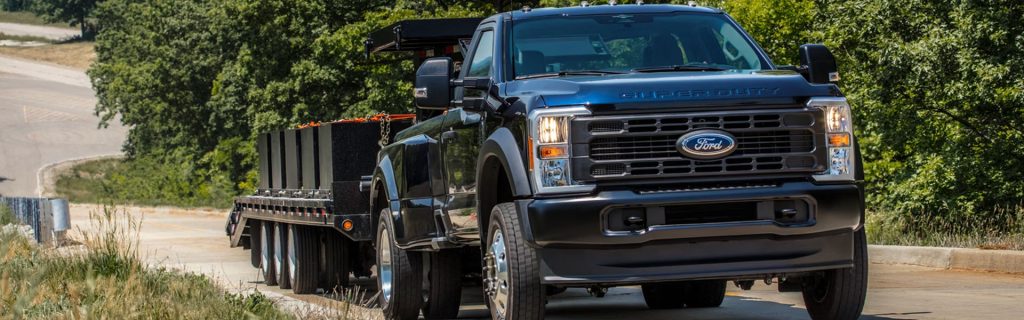
Truck shoppers often ask the same question: do I really need a Ford Super Duty, or will an F-150 handle the job?
It is a smart question. A Ford heavy duty truck can deliver serious strength for towing, payload, commercial work, and demanding jobsite needs. Still, more truck is not always the better choice. For many Miami drivers, an F-150 may offer the right mix of capability, comfort, size, and everyday usefulness.
If you are comparing a Ford Super Duty in Miami, this guide can help you think through towing needs, payload demands, daily driving, and long-term ownership before you decide.
Start With What You Actually Need the Truck to Do
The best truck is not always the biggest truck. It is the one that fits your work, trailer, passengers, tools, and daily routine.
A Ford F-150 can make sense for many drivers who need a capable full-size pickup. It can handle commuting, weekend projects, moderate towing, family travel, and light jobsite use. It also feels more manageable for everyday driving than a larger heavy-duty truck.
A Ford Super Duty is different. It is built for heavier work. If you regularly tow large trailers, carry heavy payloads, or use your truck as part of your business, moving up may make sense.
When an F-150 May Be Enough
The Ford F-150 is still a serious truck. It offers strong towing and payload ratings when properly equipped, along with a wide range of trims, engines, cab styles, and technology options.
For many shoppers, the F-150 is the smarter everyday truck because it balances capability with comfort. It can fit daily commutes, parking lots, school pickup, weekend errands, and home projects without feeling like more truck than you need.
An F-150 May Fit If You:
- Tow moderate trailers, boats, or small campers
- Use your truck for home projects and weekend work
- Carry tools or gear without reaching heavy payload needs
- Want a full-size truck that still works well as a daily driver
- Need a truck for family use, commuting, and occasional towing
If those points sound like your situation, an F-150 may give you plenty of truck without moving into the size, price, and capability level of a Super Duty.
When a Ford Super Duty Makes More Sense
A Ford Super Duty is worth considering when your truck needs move beyond normal light-duty use. These trucks are built for heavier towing, stronger hauling, jobsite demands, and commercial-style work.
Ford highlights serious Super Duty capability, including high towing and payload ratings depending on configuration. That does not mean every driver needs those numbers. It does mean the Super Duty lineup gives you more room when the job gets heavier.
If your current truck feels strained, that is a sign to take a closer look. You may notice slower acceleration under load, more braking effort, rear-end squat, or less confidence while towing in traffic or on the highway.
Towing Needs Are the Biggest Clue
Towing is often the clearest reason to move up from an F-150 to a Super Duty. The question is not just how much your trailer weighs on paper. You also need to think about how often you tow, where you tow, and how your truck feels with a loaded trailer.
A driver who tows a small boat around Miami may not need a Super Duty. A driver pulling heavier equipment, a large enclosed trailer, a bigger camper, or a fifth-wheel setup may be in a different situation.
If towing is part of your work week instead of an occasional weekend task, a Ford heavy duty truck may offer more confidence.
Payload Matters More Than Many Shoppers Realize
Payload is the weight you place in or on the truck. That can include passengers, tools, cargo, fuel tanks, equipment, materials, and trailer tongue weight.
Many drivers focus on towing but forget about payload. That can be a mistake. A truck may have enough power to pull a trailer but still struggle if the bed, cab, and trailer tongue weight push payload too far.
This matters for contractors, landscapers, maintenance crews, mobile service businesses, and drivers who carry heavy tools. If your truck spends most days loaded down, a Super Duty may be the better long-term fit.
Jobsite and Commercial Use Can Change the Answer
A truck used for business has different needs than a truck used for errands and weekend projects. Jobsite use can mean heavier cargo, rougher surfaces, long idle time, frequent towing, and more demanding daily wear.
A Ford Super Duty may make sense if your truck supports:
- Construction or contracting work
- Landscaping or lawn service
- Equipment hauling
- Trailer-based business needs
- Farm, ranch, or property work
- Commercial upfits or service bodies
This does not mean every business owner needs a Super Duty. It means commercial use should be part of the decision. A truck that works hard every day may need more strength than a typical daily driver.
Fifth-Wheel and Gooseneck Towing
Fifth-wheel and gooseneck towing are major reasons shoppers move into the Super Duty lineup. These setups often involve heavier trailers and more demanding weight distribution than a standard hitch trailer.
If you plan to tow a large RV, horse trailer, equipment trailer, or commercial trailer, do not guess. Look closely at towing ratings, payload ratings, hitch requirements, axle setup, and the specific truck configuration.
A Super Duty may be the right choice if your trailer needs exceed what an F-150 can comfortably handle. It may also give you more confidence if you tow heavy loads often.
Daily Driving in Miami Still Matters
Miami driving is not only about capability. Traffic, parking, tight roads, errands, and daily comfort all matter.
An F-150 may be easier to live with if you spend most of your time commuting, parking in crowded areas, or driving around town. It can still offer strong truck capability while feeling more practical for everyday use.
A Super Duty can still work as a daily driver, but it is larger and more work-focused. Before choosing one, think about where you park, how often you drive in traffic, and whether you truly need heavy-duty capability every week.
Cost, Fuel, and Long-Term Ownership
A Super Duty can be the right tool, but it may also come with higher costs. Purchase price, fuel use, tires, maintenance, insurance, and long-term ownership needs can all differ from an F-150.
That does not make a Super Duty the wrong choice. It simply means you should buy one for a real reason.
If the truck supports your business, handles your trailer safely, or gives you the payload confidence you need, the added capability may be worth it. If you mostly drive around town and tow only once in a while, an F-150 may be the more practical choice.
Questions to Ask Before You Decide
Before comparing trucks in person, ask yourself a few practical questions:
- What do I tow now?
- How often do I tow?
- What is my loaded trailer weight?
- Do I need fifth-wheel or gooseneck towing?
- How much weight do I carry in the bed?
- Will I use the truck for business or jobsite work?
- Do I need a heavy-duty payload rating?
- Will this truck also be my daily driver?
- Do I need more truck now, or am I planning for future needs?
- Would an F-150 handle my real workload?
These questions can help you avoid underbuying or overbuying. Both can create frustration.
F-150 vs. Super Duty: The Simple Answer
Choose an F-150 if you want strong truck capability with better everyday practicality. It can be the right choice for commuting, family use, moderate towing, home projects, and many weekend needs.
Choose a Ford Super Duty if your work or towing needs are clearly heavier. It may be the better fit for frequent hauling, commercial use, larger trailers, serious payload demands, and fifth-wheel or gooseneck towing.
The right answer depends on how you use the truck, not just the badge on the side.
Compare Ford Truck Options at Midway Ford of Miami
Midway Ford of Miami can help you compare Ford F-150 and Super Duty options based on towing needs, payload demands, cab space, bed size, technology, budget, and daily driving habits.
Our team serves Fontainbleu, West Chester, Kendall, Hialeah, and the Hammocks for shoppers comparing Ford truck options near Miami. Browse our new Ford truck inventory online, then visit Midway Ford to compare available models and take a test drive.
Connect with us


